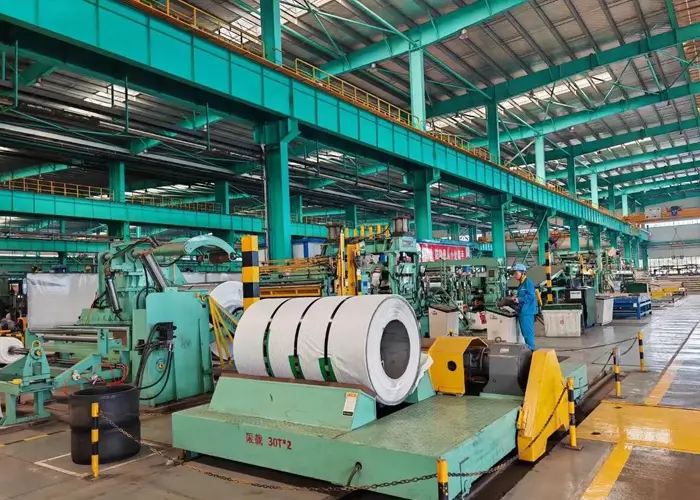
I. What is High-Strength Steel Plate? Core Definition and Strength Standards
High-Strength Steel Plate (HSLA for short) refers to a steel product whose yield strength and tensile strength are much higher than those of ordinary steel plates by adjusting chemical composition (adding alloying elements such as manganese, silicon, niobium, and titanium) and optimizing production processes (hot rolling, cold rolling, hot forming, etc.). Its core characteristics are “high strength, lightweight, easy processing, and recyclability”. Under the same force requirement, it can greatly reduce the thickness of the plate and the overall weight.
Regarding the strength classification of high-strength steel plates, there are clear industry standards that adapt to the needs of different fields: internationally, steel with a yield strength ≥ 690MPa is generally defined as high-strength steel; in the automotive field, the definition standard is usually a yield strength ≥ 600MPa, among which the yield strength of hot-formed steel can reach more than 1300MPa, and ultra-high-strength steel requires a yield strength > 1180MPa and a tensile strength > 1380MPa. In contrast, the yield strength of ordinary steel plates is only 200-300MPa, so the strength advantage of high-strength steel plates is particularly significant. The tensile strength of some high-end products can exceed 2.0GPa, which is 3-4 times that of ordinary steel plates.
In terms of composition, high-strength steel plates add alloy and micro-alloy “reinforcers” on the basis of ordinary steel plates. They improve strength and toughness through principles such as grain refinement, while taking into account processing performance, avoiding the industry problem of “high strength necessarily leading to brittleness”. This is also the core reason why they can be widely used in various complex working conditions.
II. Classification of High-Strength Steel Plates: Divided by Performance and Process to Adapt to Different Scenarios
High-strength steel plates can be classified in various ways, mainly by “strength grade”, “production process”, and “application characteristics”. Products of different types have great differences in performance, and selection should be combined with specific use scenarios. The following are the 3 most commonly used classifications in the industry and their core representative products:
1. Classification by Strength Grade (Most Commonly Used, Suitable for All Industries)
-
Ordinary High-Strength Steel Plates: Yield strength 345-600MPa, tensile strength about 400-450MPa. The process is relatively simple and the price is affordable. They are mainly used in scenarios with moderate strength requirements, such as ordinary engineering machinery, building envelope structures, and small agricultural machinery. They are currently the most widely used entry-level high-strength steel products.
-
Advanced High-Strength Steel Plates (AHSS): Yield strength 600-1180MPa, represented by dual-phase steel (DP steel) and transformation-induced plasticity steel (TRIP steel). Through optimized composition and process, they achieve a balance between high strength and high elongation, with excellent processing performance. They are core materials for automotive lightweighting and high-end engineering machinery. Products with tensile strength exceeding 980MPa even have better specific strength than aluminum alloy, with outstanding lightweight potential.
-
Ultra-High-Strength Steel Plates (UHSS): Yield strength ≥ 1180MPa, tensile strength ≥ 1380MPa. Representative products include hot-formed steel (such as BR1500HS, whose strength can reach more than 1500MPa after treatment) and martensitic steel. They have extremely high strength, excellent impact resistance and deformation resistance, and are mainly used in scenarios with extremely high safety requirements, such as automobile body frames, aerospace components, and high-pressure vessels. At present, 2.0GPa grade hot-formed steel plates have been applied to core components such as automobile center pillars.
2. Classification by Production Process (Suitable for Production and Processing Needs)
-
Hot-Rolled High-Strength Steel Plates: Rolled at high temperature, with a relatively thick thickness (usually 3-100mm), good toughness and corrosion resistance. They can be directly used for large structural parts without complex subsequent processing, such as bridges, ships, boilers, and hoisting machinery, and are one of the core materials in heavy industry.
-
Cold-Rolled High-Strength Steel Plates: Rolled at room temperature, with a relatively thin thickness (0.3-3mm), flat surface and high precision, and excellent processing performance. They can be further stamped and bent, and are mainly used in scenarios with high requirements for appearance and precision, such as automobile bodies, home appliance casings, and precision instrument casings.
-
Hot-Formed High-Strength Steel Plates: Adopt an integrated process of “heating-stamping-die quenching”. The steel plate is heated to about 900℃ in the austenitic single-phase region, rapidly cooled after stamping and forming to form a high-strength martensitic structure. The strength is not affected by the state before forming. They are mainly used for automobile safety parts (such as bumpers, center pillars, and longitudinal beams), which can greatly improve collision safety while reducing weight.
3. Classification by Application Characteristics (Precisely Matching Industry Needs)
In addition to the above classifications, the industry also divides special products according to the special needs of application scenarios, such as weather-resistant high-strength steel plates (corrosion-resistant to atmospheric environment, used for outdoor buildings and bridges), impact-resistant high-strength steel plates (used for mining machinery and engineering machinery), and welding high-strength steel plates (such as WQ690D, which can maintain good impact performance at -20℃ and is used for welded structural parts), to meet the personalized needs of different industries.
III. Core Advantages of High-Strength Steel Plates: Why Can They Replace Ordinary Steel Plates?
Compared with ordinary carbon steel plates, the advantages of high-strength steel plates are concentrated in four dimensions: “strength, weight, cost, and environmental protection”. They not only solve the core pain points of traditional steel but also conform to the current trend of industrial upgrading and low-carbon development. The specific advantages are as follows:
1. Outstanding Strength, Safe and Reliable
The yield strength and tensile strength of high-strength steel plates are much higher than those of ordinary steel plates. They can bear greater loads, impact forces and deformations, are not easy to break or deform, and can effectively improve the service life and safety of products. For example, after automobiles adopt high-strength steel plates, the collision resistance of the body is greatly improved, which can better protect the drivers and passengers; after bridges and high-rise buildings use high-strength steel, they can resist extreme working conditions such as earthquakes and strong winds, with stronger structural stability. At the same time, their specific stiffness is basically equivalent to that of aluminum alloy, which has the same lightweight potential in terms of stiffness requirements.
2. Significant Lightweight, Energy Saving and Consumption Reduction
This is one of the core advantages of high-strength steel plates. Under the same force requirement, high-strength steel plates can greatly reduce the thickness (20%-50% thinner than ordinary steel plates), thereby reducing the overall weight. Taking the automotive industry as an example, the weight of an ordinary passenger car is about 1 ton, and steel materials account for 70%. After adopting high-strength steel plates, the weight of the car body can be reduced by 10%-15%, thereby reducing fuel consumption (for every 100kg weight reduction, the fuel consumption per 100 kilometers can be reduced by 0.3-0.5L), which is in line with the development trend of automobile electrification and greenization; in the fields of construction and engineering machinery, lightweight can reduce transportation costs and installation difficulty, and improve construction efficiency.
3. Convenient Processing, Strong Adaptability
Many people mistakenly believe that “high-strength steel plates are difficult to process”, but this is not the case. With the upgrading of production processes, advanced high-strength steel plates (such as DP steel and TRIP steel) have good stamping, bending and welding performance, and can adapt to the processing equipment of traditional steel plates without large-scale transformation of the production line. They can not only meet the processing needs of complex shapes but also improve production efficiency. At the same time, by optimizing the composition (such as controlling the carbon equivalent), some high-strength steels also have excellent welding performance, which can meet the welding needs of large structural parts. For example, the Q460 series high-strength steel does not affect the welding performance while improving the strength.
4. Controllable Cost, Outstanding Cost-Effectiveness
Although the unit price of high-strength steel plates is slightly higher than that of ordinary steel plates, the comprehensive cost-effectiveness is better. On the one hand, its lightweight characteristics can reduce subsequent transportation, installation and use costs (such as automobile fuel consumption and engineering machinery energy consumption); on the other hand, its service life is longer, which can reduce the replacement frequency and maintenance cost of products, and greatly save the total cost in long-term use. In addition, the production process of high-strength steel plates is mature, and mass production can further control the cost. Compared with other lightweight materials such as aluminum alloy and magnesium alloy, it has a more obvious cost advantage, and product upgrading can be achieved without high investment.
5. Environmentally Friendly, Recyclable
Under the background of carbon neutrality, the environmental protection advantage of high-strength steel plates has become increasingly prominent. From the perspective of Life Cycle Assessment (LCA), the carbon dioxide emission in the steel production stage is much lower than that of aluminum alloy (the blast furnace method produces about 2 tons of carbon dioxide per ton of steel, which is much lower than the aluminum alloy electrolytic refining process); at the same time, high-strength steel plates can be 100% recycled and reused, with low recycling cost, and the performance after recycling is basically not affected. They can effectively reduce resource waste and environmental pollution, meet the green and low-carbon development needs of various industries, and are one of the preferred materials for sustainable development.
IV. Application Scenarios of High-Strength Steel Plates: Covering Multiple Industries with Prominent Rigid Demand
With the above advantages, high-strength steel plates have been widely used in many industries such as automobiles, construction, engineering machinery, ships, aerospace, and home appliances, becoming core materials promoting the upgrading of various industries. The specific application scenarios are as follows:
1. Automotive Industry (Largest Application Field, Accounting for More Than 60%)
With the development of automobile electrification, lightweight and safety, high-strength steel plates have become the core materials of automobile bodies, accounting for more than 60% of the steel used in the body. Different components are adapted to different types of high-strength steel:
-
Safety parts: Bumpers, center pillars, front longitudinal beams, rear longitudinal beams, etc., adopt 1470MPa grade cold-rolled steel plates and 1800-2000MPa grade hot-formed steel plates.


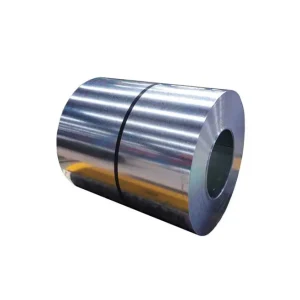 แผ่นเหล็กชุบสังกะสี (GI Coil)แผ่นเหล็กชุบสังกะสี (GI Coil)
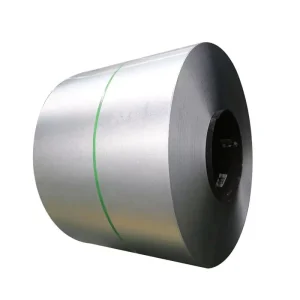 แผ่นเหล็กกัลวาลูม (GL Coil)แผ่นเหล็กกัลวาลูม (GL Coil)
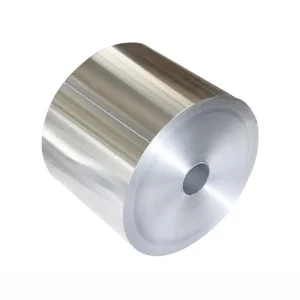 แผ่นเหล็กสังกะสี-อุลมิเนียม-แมกนีเซียม (รวบรัด: ZM Coil)แผ่นเหล็กสังกะสี-อุลมิเนียม-แมกนีเซียม (รวบรัด: ZM Coil)
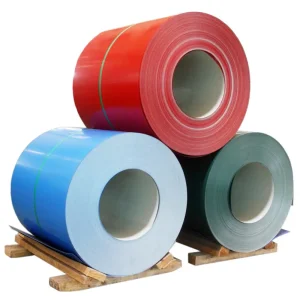 แผ่นเหล็กสังกะสีผ่านการทาสี (PPGI Coil)แผ่นเหล็กสังกะสีผ่านการทาสี (PPGI Coil)
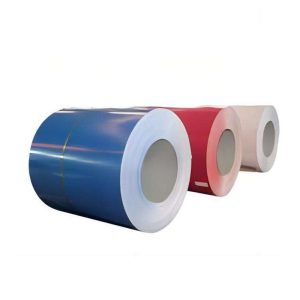 แผ่นเหล็กกัลวาลูมผ่านการทาสี (PPGL Coil)แผ่นเหล็กกัลวาลูมผ่านการทาสี (PPGL Coil)
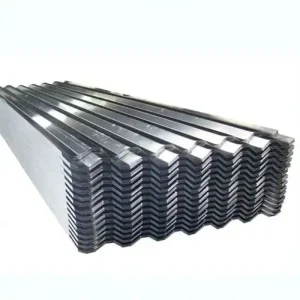 แผ่นหลังคา GI/GLวัสดุฐาน เลือกวัสดุเหล็กคุณภาพสูง รุ่น SPCC/SPHC; GI ผ่ […]
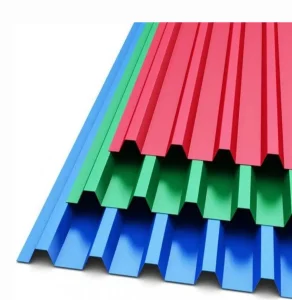 แผ่นหลังคา PPGI / PPGLวัสดุฐาน เลือกวัสดุเหล็กคุณภาพสูง รุ่น SPCC/SPHC; GI ผ่ […]